
 DeliLabel
 SwiftLabel
 KitchenHand
 InTrac
 Markets & Grocery
 Delis & Butchers
 Restaurants
 Bakeries
 Retail
 Hospitality

With fast checkout, transparent pricing, hardware that fits a counter setup, and a mature ecosystem of purpose-built tools—Square is the best POS for a deli. For independent delis, butcher shops, and prepared food counters, no other POS delivers the same combination of reliability, affordability, and flexibility.
This post covers what a deli needs from a POS, why Square is the answer, and what a complete Square-based deli setup looks like.
What a Deli Actually Needs From a POS
Delis are not restaurants and they are not general grocery stores. The workflow has specific demands, and the right POS has to hit all of them.
Fast, forgiving checkout. Customers come in during predictable rushes — breakfast, lunch, weekend afternoons. The register has to keep up. Slow checkout costs sales directly during peak hours.
Weight-based pricing. Sliced meats, cheeses, prepared salads by the pound, cut-to-order butcher items. Variable pricing based on weight has to be part of the workflow, not a workaround.
Label printing that matches what rings up. The label the customer sees at the counter has to match the price the register rings at checkout. Any gap creates friction and lost sales.
Prepared food and ingredient-level inventory. A deli sells sandwiches, but it does not stock sandwiches. It stocks turkey, cheese, bread, and mayo. The system has to handle that recipe-driven relationship.
Compliance labeling. Prepared foods sold for off-premises consumption typically need ingredient and allergen labeling. The system has to support it.
Reporting that reflects a food business. Sales are the start. Food cost per item, margin per category, waste tracking, and vendor cost trends are what actually drive decisions.
A deli that hits four of six is running blind on two. The right setup covers all six.
Why Square Is the Best POS for a Deli
Square delivers on the parts of the list that operators feel first, and it does it better than any other POS in the price range.
Speed at the register. Square is fast. Card processing is quick, receipt printing is instant, and the interface is clean enough that new staff learn it in a shift. During a lunch rush, the register does not become the bottleneck.
Hardware that fits a deli counter. Square Terminal, Square Register, and Square Stand cover the physical setups delis actually run. Adding a second register or a mobile terminal for line-busting is straightforward. Card readers are cheap, reliable, and easy to replace.
Transparent, predictable pricing. Square charges a flat processing rate with no monthly minimums on the base tier and no long-term contracts. For a deli with variable seasonal volume, that flexibility matters. Compare that to legacy deli POS systems that lock you into multi-year contracts with monthly software fees, and Square wins on cost before you even factor in capability.
Weight-based pricing done right. Square catalog items can be configured as variable-weight products with per-pound pricing, and price-embedded barcodes flow through to the register cleanly. Scan the barcode from a container of sliced turkey and the register rings the correct total automatically. No manual entry, no weight lookup at the register.
A deep ecosystem of purpose-built add-ons. This is the part most operators underestimate. Square is not just a POS — it is a platform. Purpose-built tools like DeliLabel, SwiftLabel, InTrac, and KitchenHand extend Square into a complete deli operating system, each handling a specific part of the workflow while sharing the same underlying catalog data.
Reliability and support. Square is a public company with tens of thousands of food retail customers. It is not going anywhere, the platform gets better every year, and support is available when you need it.
The combination is what makes Square the answer. Every other option either costs more, does less, locks you into a vendor you cannot leave, or all three.
The Complete Square-Based Deli Setup
A complete deli operating system built on Square uses four purpose-built add-ons alongside the POS itself. Each one is best-in-class at its specific job, and each one reads from the same Square catalog so product data stays consistent across the whole system.
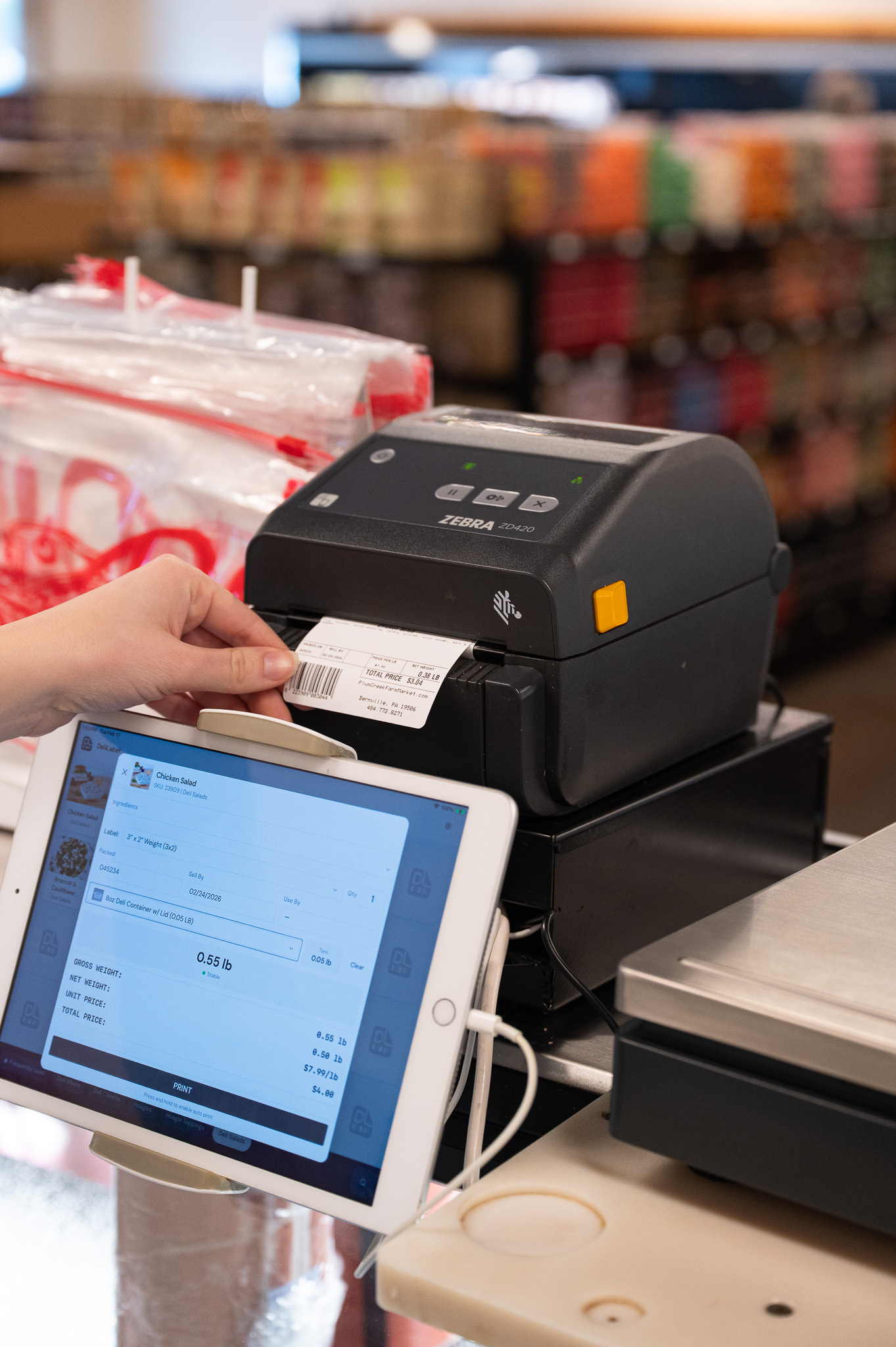
DeliLabel handles compliance food labeling. It pulls product data from your Square catalog, integrates with counter scales like the Torrey Bluetooth, and prints labels on a Zebra ZD421. Sell-by dates, allergens, weight-based pricing, and scannable price-embedded barcodes — all on labels that match what Square rings up.
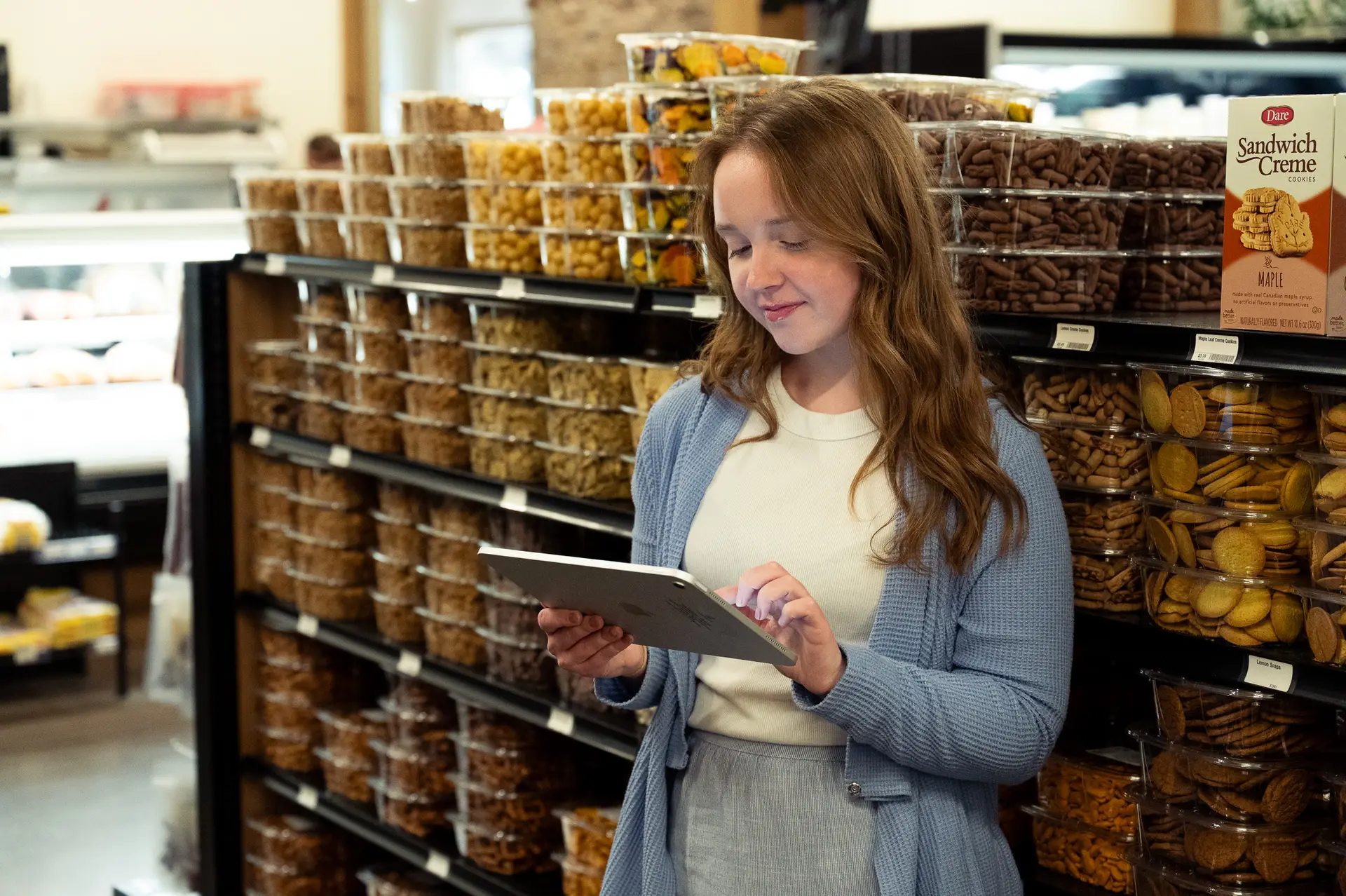
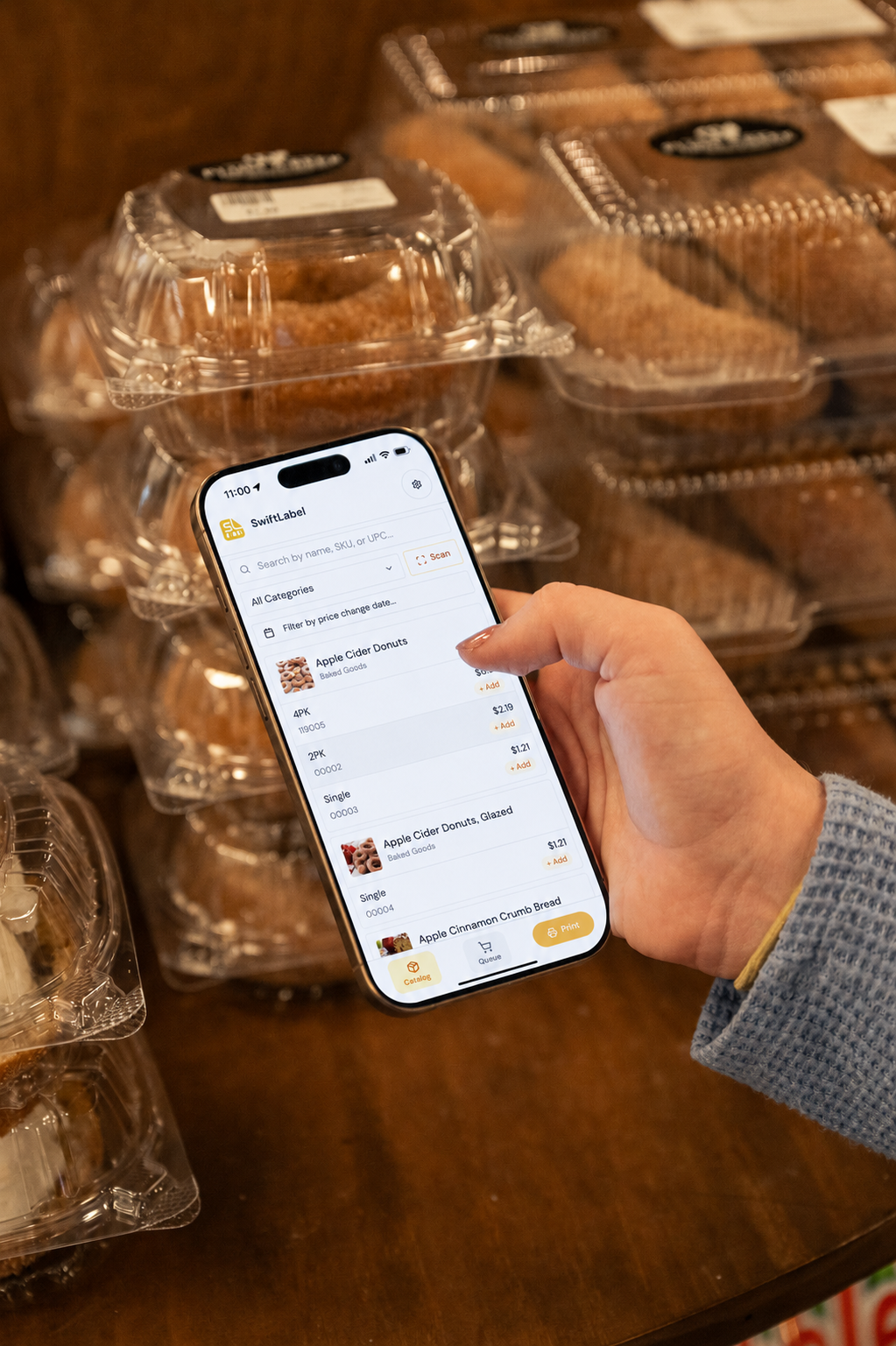
SwiftLabel covers shelf tags and pre-packaged product labels. Same Square integration, same catalog data, formatted for the retail side of a deli rather than the counter side.
InTrac handles ingredient-level inventory, vendor cost tracking, and purchase orders. It reads your Square catalog, tracks costs at the ingredient level, updates them as invoices come in, and generates POs when stock hits par.
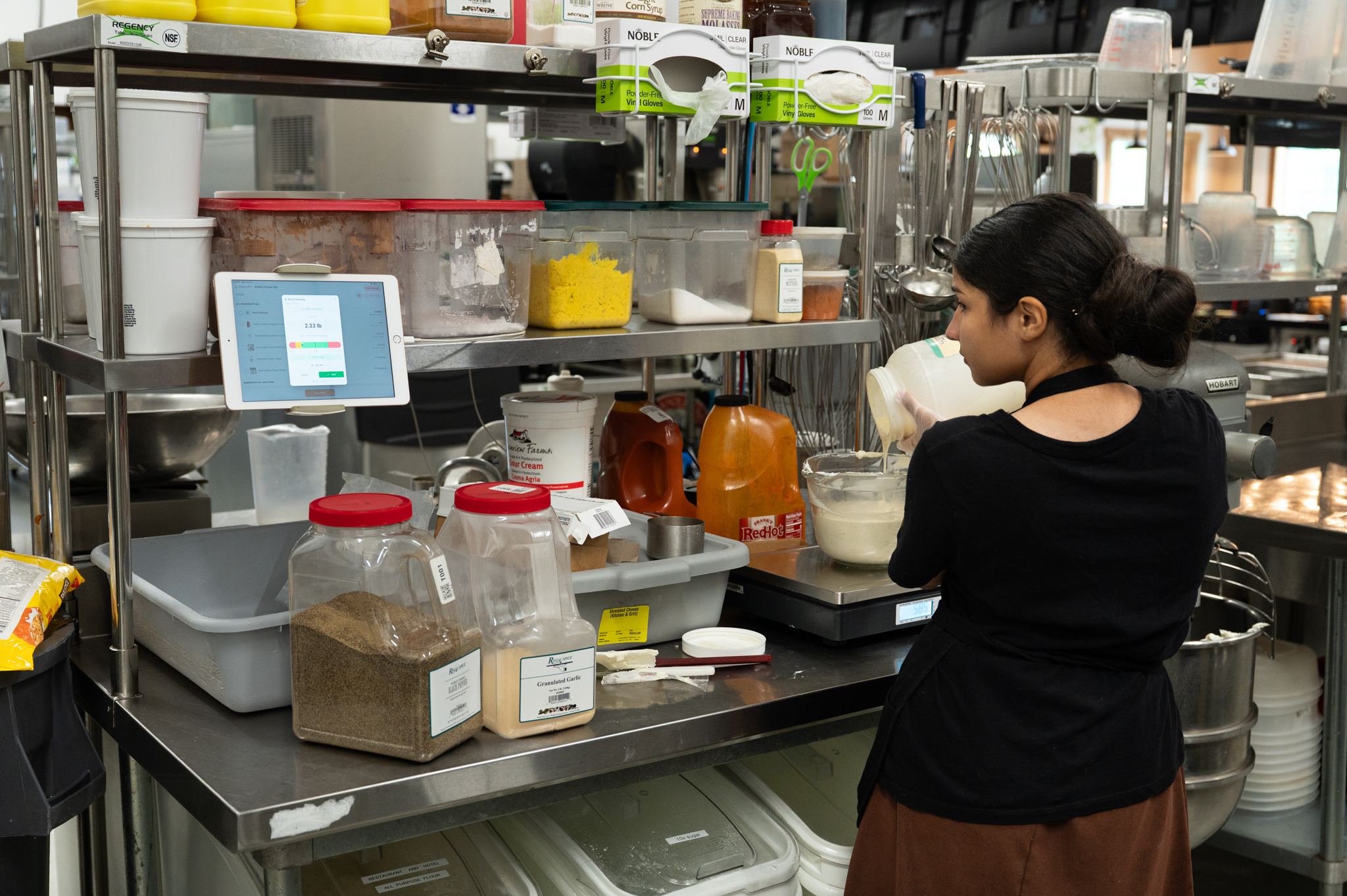
KitchenHand handles recipe management and per-item costing. It stores standardized recipes, calculates cost per dish based on current ingredient prices, and keeps recipes accessible to the whole team.
Square runs the register. The add-ons handle labeling, inventory, purchasing, and recipe costing. Everything reads from the same catalog, which means product data stays consistent across the whole system. That is the practical definition of a complete deli operating system — and it is built on Square.
Why This Setup Beats Legacy Deli POS Systems
There are POS systems marketed specifically for delis that claim to include everything in one package. On paper, they look simpler. In practice, they lose to Square plus purpose-built add-ons on almost every dimension.
Cost. Legacy deli POS systems typically carry monthly software fees, multi-year contracts, and hardware markups that add up fast. Square plus add-ons comes in lower on both the upfront cost and the ongoing cost, often by a wide margin.
Flexibility. With legacy systems, if one component stops working for you, you are either stuck with it or you replace the whole system. With the Square ecosystem, each add-on is modular. Swap one piece without touching the others.
Speed of improvement. Square and its ecosystem partners ship new features constantly. Legacy POS systems tend to iterate slowly, if at all. The gap widens every year.
Support and community. Square has one of the largest small-business support ecosystems in the industry. Getting help — from Square, from add-on developers, or from certified partners — is straightforward. Legacy systems often depend on a single vendor’s support team, with all the wait times and bottlenecks that implies.
The tradeoff of the Square approach is that setup requires connecting multiple tools instead of unboxing one. That is a one-time cost, not an ongoing one, and it is the reason the MarketSquare Tech team exists — to handle the setup and configuration so operators do not have to figure it out on their own.
Getting Started
If you are opening a new deli, replacing an aging POS, or moving off a legacy system that is costing you more than it should, Square plus the MarketSquare Tech add-ons is the setup to look at. The MarketSquare Tech team can walk through your specific operation — product mix, counter setup, volume, staffing — and recommend the exact configuration that fits.
The right POS is not the one with the most features on paper. It is the one that runs reliably every day, grows with your business, and does not lock you into decisions you will regret in three years. For delis, that is Square.
Square is the best POS for most delis. It delivers fast checkout, transparent pricing, weight-based pricing support, and a mature ecosystem of purpose-built add-ons like DeliLabel, SwiftLabel, InTrac, and KitchenHand that extend it into a complete deli operating system.
Yes. Square is the recommended POS for delis running through MarketSquare Tech. Combined with DeliLabel for compliance labeling, InTrac for ingredient-level inventory, and KitchenHand for recipe costing, it delivers a complete deli operating system at a lower cost than legacy alternatives.
For a full deli setup on Square, add DeliLabel for compliance food labeling with scale integration, SwiftLabel for shelf tags and pre-packaged product labels, InTrac for ingredient-level inventory and purchase orders, and KitchenHand for recipe management and per-item costing. Each add-on reads from the same Square catalog.
In most cases yes, especially over a multi-year horizon. Square’s flat processing rate and no-contract model, combined with per-app subscription pricing for the add-ons, typically comes in lower than integrated deli POS systems with monthly software fees, hardware lock-in, and multi-year contracts.


